
Why Am I Writing About Time?

I’ve been thinking about time lately. It might be because I have a lot of it these days. In November 2021, I decided to take a leave of absence from work, and for the last three months, my calendar has never been more open. But this piece isn’t about my “rest and recharge” leave, as I like to call it. It’s about time, and to be more specific, it’s about how we understand it.
The concept of time is complex as f*ck. Time is one big riddle that most of us haven’t figured out yet. What’s something we wish we had more of yet want to speed up? Time. What’s something that we lose one day and gain the next? Time. What’s something that we struggle to manage because it seems to control us? Time. Time has shapeshifting properties that we cannot see, but we can certainly feel. Time feels great when we find ourselves relishing in the moments that bring us joy—the moments that eventually catch us in the middle of the day as sweet memories.
In contrast, time doesn’t feel enjoyable when our to-do list is greater than the number of hours we have in a day. We feel the pressure at work and in our homes to get things done quickly. But I am in a space in my life where I am questioning things more, and time happens to be one of them. Time shouldn’t feel like cinderblocks on our shoulders, pushing us deep into the sand. Time should feel like it’s moving us forward, with purposeful change that does more good than harm.
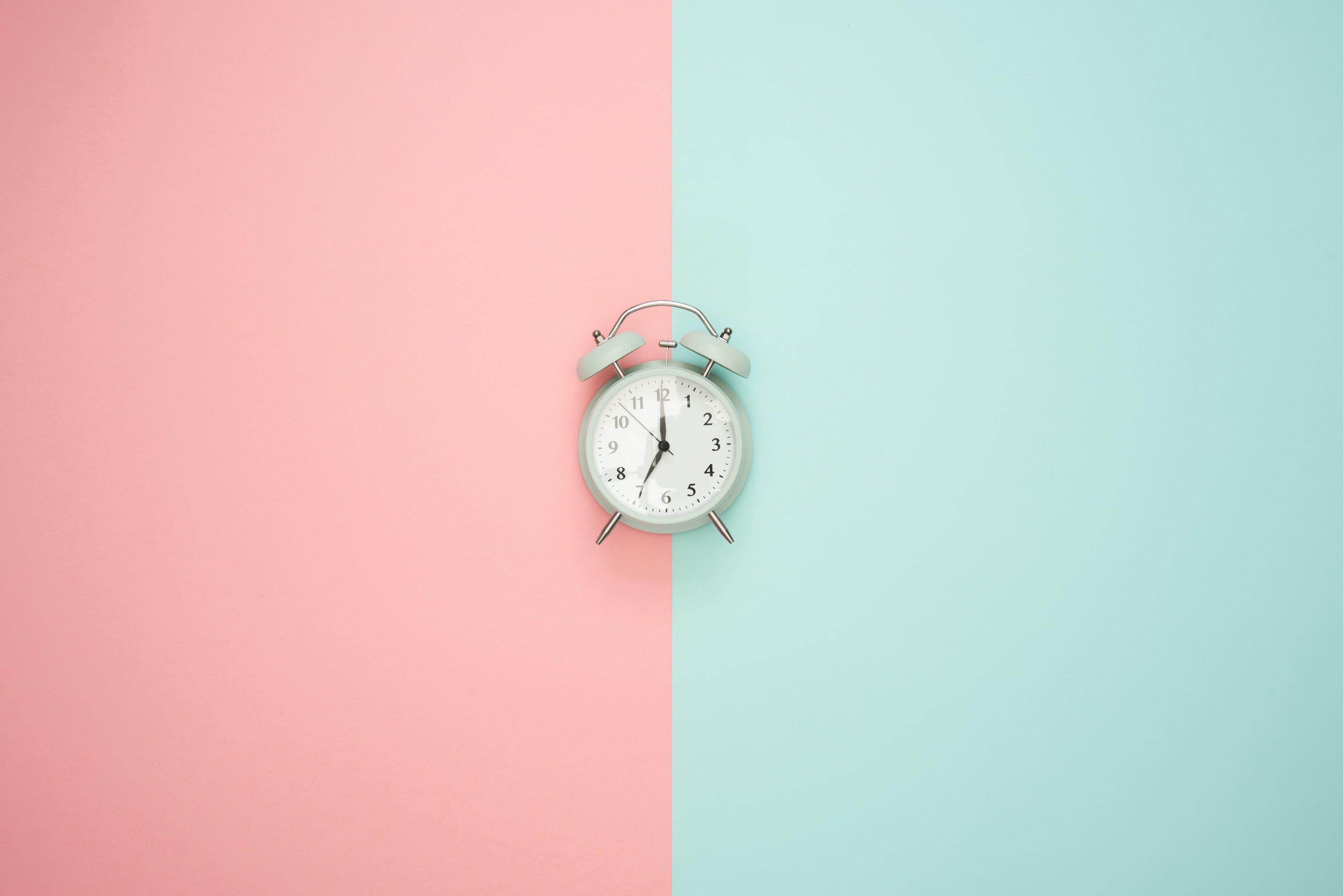
We often view life as time-bound and through the same lens as we view money. Capitalism turned time into one of the few currencies you don’t need to exchange when crossing borders. The phrase “time is money” transformed into the mission statement of the modern workforce. Workers trade their time for money, but not at the actual value. The true value of their time is the exorbitant amount of money that companies and shareholders gain in the trade. I mention this to illustrate what we believe is at stake when time isn’t used strategically to increase its actual value. Money gives us the things we need, and we’re told we shouldn’t waste it. And, we say the same about time. I admit that I have spent most of my life believing this is true and contributing to an unbalanced system. However, as I get older and recover from burnout, I notice that my alignment with society’s traditional view of time is changing. To be clear, I am not taking the stance that we shouldn’t care about time. I’m saying that time shouldn’t make us feel inadequate, and we shouldn’t feel guilty for “wasting” it because we fear losing its actual strategic value.
Throughout my life, people have told me that time is a scarce resource, something we can never get back. But isn’t that the point? It’s okay if you spend hours on the couch, watching Netflix. It’s okay if it takes a year to figure out that you want to switch careers. And it’s completely okay that I am taking time away from work to prioritize my mental health and well-being. Time is meant to be used, and if watching the entire Jason Bourne film series (my happy place) for the sixtieth time is what you want to do, then so be it.

So, why am I writing about time? I’m writing about time because I want to control how it makes me feel. I want to overcome the pressure of using time in the “right way.” I want to use time my way. Time replenishes when the sun sets and rises the next day, and that very thought is shifting my mindset. Ironically, I know it will take time to undo years of thinking in a certain way. But thankfully, I realize that if there is a today and a tomorrow, time isn’t as scarce as we think. As long as we continue to wake up with the sun, time will be there for us to use and knowing that feels wonderful. Now more than ever, it’s essential that we remember how the sun makes us feel when it rises. It energizes us and makes us feel good. And time can have the same effect on all of us. I hope.
What an insightful perspective on the concept of time. I really enjoyed this read.
Great piece Chi-Chi